With the series “how she did it”, we want to showcase women from different career backgrounds. We believe that by bringing the stories of these women to the fore, we could, in some way provide context for young girls yet to make a career decision or for mid-level career women, who are considering a switch to something different.
Guest Profile
In our maiden edition of how she did it, we kick off with a conversation from a Nigerian nutritionist who is working to improve the diets and nutrition of thousands of women and children.
Today’s guest is a registered dietician and nutritionist. In addition to possessing a bachelor of science degree in Nutrition and Dietetics, she has certifications in Nutrition and Lifestyle in Pregnancy as well as Child Nutrition and Cooking from the prestigious Stanford University California.
She is certified in Food Hygiene, Health and safety, and sickle cell disease management from Florence Academy, United Kingdom. Our RDN comes with a wealth of knowledge in clinical nutrition and is a member of the Nutrition Society of Nigeria (NSN).
Our guest is also an entrepreneur who has shared her knowledge on healthy living on various online and offline platforms.
Introduction
Interviewer: Hello, can we meet you?
Hello, my name is RDN Chinwe Umeh, I am a dietician and I studied at Imo State University, Nigeria. I have been practising for over 7 years and I currently work with St. Martins Hospital in Port Harcourt, Nigeria. I am a member of the Dietitians Association of Nigeria (DAN) and a member of the Nutrition Society of Nigeria.
When I am not in the hospital, I dabble as an entrepreneur. I am the founder of Cedarz Wellness – a wellness coaching platform and the Co-founder of The Pantry NG – an online grocery store for organic food.
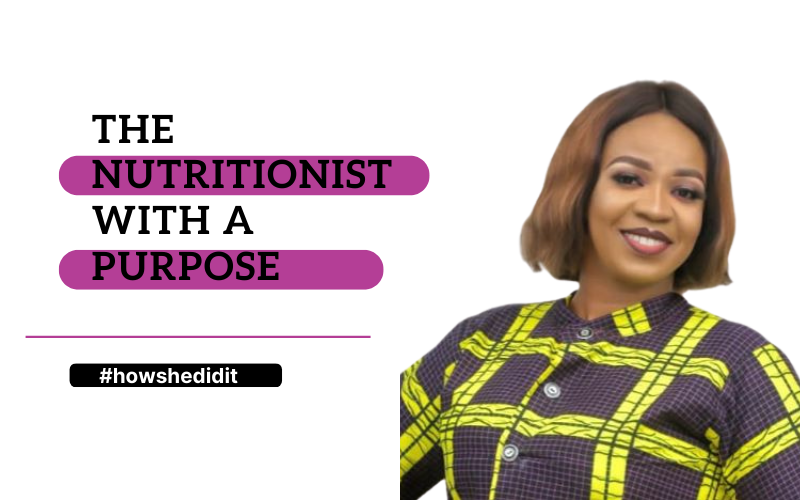
I like to think of myself as a nutritionist with a purpose.
Interviewer: We often see the professions “Dietician” and “Nutritionist” used interchangeably and we see that you belong to two separate associations for both professions. Please clarify the difference in the terminologies and job roles to us.
A Dietician is a qualified and certified health professional that has been trained to assess, diagnose and treat patients with nutritional challenges at an individual level and handle public health issues as well. They are able to consult with other medical professionals in patient care requiring directory management.
They are able to initiate medical nutrition therapy with respect to the disease condition of the patient.
On the other hand, nutritionists go through similar training as dieticians but on a broader level. They focus more on key nutritional modules and offer their services, on a commercial level. In summary, all dieticians are nutritionists but not all nutritionists can be dieticians.
Interviewer: In Africa, we do not see a lot of women participating in the STEM fields. Why did you choose to specialize in nutrition? We want to know how you did it?
My very first encounter with my Food and Nutrition teacher in secondary school – Mrs Corkson, was the determining point in my life. She opened my eyes to the connection between food and health and all the career possibilities that existed at that intersection.
Interviewer: Can you tell us what a typical day at work is like for you?
Each day at work is always different. It’s an adventure, you do not quite know what to expect as I get to meet a wide range of individuals with varying cases.
Navigating the field of Nutrition
Interviewer: What has your experience been like career-wise? Would you say your decision was worth it?
It was quite tricky finding my path at first, as you know life has its ups and downs. Getting to work in the maternal/child sector has been incredibly fulfilling for me. I am happy with the knowledge I have gained in this field and the impact I have made in the lives of the women and children I have been privileged to care for. To nurture a child growing inside of you is a wonderful experience. Being able to provide nutritional coaching to these strong women is, indeed, a privilege that I do not take for granted.
Interviewer: Let’s talk about the field of nutrition itself, what has your experience been in terms of the value hospitals and individuals place on the roles of dieticians?
The experience so far has been quite challenging as the health sector is one that the general public in most cases takes as the sole responsibility of the doctor. Each expert in health has a role to play and they have been specifically trained for that role. This is why someone with dental issues should not seek medical advice from a midwife for example.
Sadly, this also exists in the practice in Africa as some specialists tend to go beyond the scope of their training in providing healthcare advice and this can have a disastrous outcome.
More work needs to be done in educating the public on the specific roles of dieticians and nutritionists. The profession goes beyond meal planning and preparations.
Interviewer: As a woman in your field, what has your experience been like? Is there competition from the opposite gender or is it a mostly female-dominated space? What can women do to stand out more in this field?
Over the past few years, women have dominated this profession. For instance, during my university days, out of a total of 27 persons, we had just 5 males training alongside us. Some of them were there primarily because they could not get into medicine and surgery.
As much as I love to see more women in STEM professions, especially health, there is a need to have a gender-balanced profession due to the cultural constraints that prevent direct interaction of the opposite sex in some regions of the country and Africa at large.
This means that quite a number of a particular gender may be unable to access the services of a nutritionist. With more sensitization workshops being carried out, we are seeing more males embracing nutrition as they have come to understand its importance but it is still not where it needs to be yet.
Standing out as a lady in this field entails that you focus on being the best version of yourself through constant upskilling and personal development, and your work will eventually gain recognition.
Interviewer: Asides from working in a hospital, where else can a dietician practice their profession?
The options are endless, they include; food companies, corporate wellness outfits, primary care network clinics, outpatient services, and food processing companies, just to name a few.
Career Advice
Interviewer: Before we go, what’s your advice for women interested in nutrition?
As a nutritionist, you have to have a passion for your work if you want to thrive in this field. It is a highly rewarding profession as you get to play a significant role in changing the lives of people. Additionally, it is a vast field, in the sense that there are so many career pathways to follow. As a nutritionist, you can fit in different sectors. You can work from home or work from an onsite location. The key is to ensure that you are constantly improving on your knowledge and experience to be able to offer excellent service to your clients or patients.
Interested in other STEM opportunities outside the health sector, check out our article on how to become a product manager.