
You must have heard the phrase “waste to wealth” at one time or the other but have you taken some time to really think about what it means, especially for the food industry?
Ever taken a glance at your waste bin or that of your next-door neighbor?
What can you see? Let me guess…
Amongst other things, food grains, rotten vegetables, and moldy bread. All entangled amongst other refuse.
This is also a similar scenario outside the walls of your home. Hotels and restaurants discard untouched meals and leftovers in large quantities each passing seconds.
Grocery stores aren’t left out either. Expired food items find their way out of the shelves almost immediately. Sadly, it has became a norm to discard food in some opulent environments. Most people including food retailers and suppliers do not have faintest idea of the quantity of food they waste.
Food Waste is a global challenge that has depleted resources, and endangered lives (emitted greenhouse gases causes environmental pollution that is detrimental to human health).
While food waste may seem inevitable, it’s interesting that efforts steered towards lowering food waste signals potential business opportunities that you should be jumping on. You are welcome!
Where Waste Happens
Evidently, majority aren’t aware of the factors that causes food wastage. They don’t understand how food wastage stems from certain habits or activities in their daily lives or job. Therefore, if you must combat food waste, you should know where and how it originates. Here are a few examples
1. Food Production
Farmers and manufacturers don’t set out to incur some losses at the beginning of every production. However, this is the phase that some losses are recorded for various reasons like inefficient or poor farming practices.
For instance, it is general knowledge that fertilizer nourishes and protect plants. Nevertheless, the usage of excessive fertilizer can reduce the shelf life of food crops when they are harvested, because they get rotten easily and eventually thrown away.
On the other hand, inadequate nutrition has a negative effect on crops, and eventually leads to wastage. Also, consumers are likely to purchase items that have flattering aesthetic appearance, irrespective of the taste. Thus, food wastage can stem from rejection of food items solely because of unappealing packaging and appearance.
2. Food Processing
There’s a remarkable increase in the demand for food, especially in developing countries. Farmers utilize diverse methods of growing food crops on a large scale to increase production and readily availability of food.
Unfortunately, overproduction of food crops leads to food surplus and eventually food waste when the demand for these foods are less than the supply.
3. Retail and Grocery Stores
Overstocking is the main culprit of food waste in grocery stores across the globe. Grocery stores where poor inventory management is a practice will always have accumulated stale and expired food products on their shelves.
Poor storage conditions like extreme temperature, moisture, poor spacing and the likes can affect the color and texture of fresh foods. Regular inventory management and good storage conditions are prevention strategies to prevent wastage at this level.
4. Hospitality
A lot of cooking takes place in the kitchen of restaurants and hotels. As a result of the quick turn around times in these places, food waste may be inevitable, except strategic measures are in place.
The goal of every chef is customer satisfaction. Therefore, burnt food and over salted food will not be served. Additionally, customers may not finish large food portions, and they will be thrown away. On slow traffic days, all excess food prepared, goes to waste.
Waste to Wealth – Innovative Business Models
Through the years, various strategies have been devised by food companies to manage this alarming situation. Some of the solutions developed have been proven to effectively manage food waste in the industry. Interestingly, some of these strategies have birthed new products in themselves. Some of them are listed below.
a. Upcycled Food Products
Have you ever used your overripe bananas in making banana bread or turned your slightly stale bread into breadcrumbs. If yes, then kudos to you!
If you haven’t, not to worry, there are several video tutorials online that teach you how to do this. It is called upcycling.
Upcycling is a process of creating something new out of food items that could be wasted. Through upcycling, two things happen – food waste is eliminated, and a new food concept is achieved.
The food industry have over time employed this strategy to reduce food wastage and generated more profits, by saving cost and selling upcycled food products.
You can turn your fresh ginger to ginger powder, fresh chili to chili powder etc. to make them last longer in your pantry or you can even make a business out of it. Dehydrated, ground orange peels have long been used in the organic skincare industry as exfoliant.
A simple food dehydrator like the one below is quite a good place to start experimenting with some fruits and vegetables.
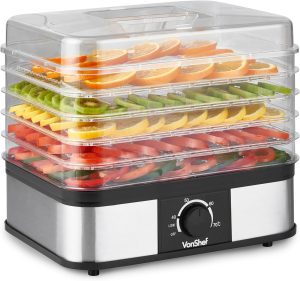
Image credit: Amazon
b. Imperfect Produce Services
Certain food businesses have tackled food waste by selling ugly, but perfectly edible food produce to customers at a discounted rate. Slightly bruised tomatoes or cucumber with intact nutritional value may not look appealing on the shelves in a grocery store.
Rather than discarding these ‘unappealing vegetables’, they are made accessible to people at a minimal cost. Aside from waste reduction, the core of this strategy is to reinforce that certain imperfections are good and should be embraced.
c. Food Rescue Apps
At the end of each day, bakeries always have unsold/ left over baked products. Similarly, restaurants and hotels are often left with piles of excess food. These leftovers can be listed on Food Rescue Apps, where people can readily have access to them online and place an order.
The invention of Food Rescue Apps has tremendously played a vital role in reducing food waste on a large-scale level. These Apps enable users have access to foods from restaurants, bakeries, and other food service establishment at reduce rates.
Certain Apps like Food Cowboy facilitate the donation of surplus foods to those in need. Grocery stores with surplus food items with fast approaching expiry dates utilize these apps to connect with nearby food banks that can share free food items to people.
Thankfully, this has helped many businesses curb food wastage and provided comfort meals for those in need.
d. Closed – Loop Composting
How does this work?
Basically, composting is a natural process of enhancing soil’s physical, biological, and chemical properties through the introduction of food waste that decomposes into the soil.
Tea leaves, eggshells, coffee grounds, banana peels and other fruits or vegetable peels are examples of food waste that can be composted. It is simply nature’s recycling system.
This method drastically reduces food waste with minimal efforts and resources. In addition, environmental pollution is eliminated, because food scraps that pile up the landfills, leading to the emission of greenhouse gases are reduced.
This minimizes the usage of synthetic fertilizers which are loaded with chemical substances that are detrimental to the plants, soil, and environment.
If you have a small garden or have plans to start one, then getting a composter will definitely be beneficial to you. In addition to helping you to reduce your household food waste, it helps store all organic waste to reduce decomposing odours and ensures you have some organic fertilizer for your fruits and vegetables.

Image credit: Amazon
They are quite useful for vegetable and fruit scraps, egg shells, grass cuttings, leaves etc
Be self-sufficient by recycling waste into useful compost.
Business Benefits Beyond the Environmental Halo
Eliminating food Waste makes the world a healthier and safe place, while conserving resources for future generations. However, there are also business benefits that comes with reducing food waste.
i. Cost savings
This is imperative for any profit driven enterprise. Waste to wealth strategies help in saving resources at all levels.
Look at this example – A smoothie company produces 20,000 bottles of Pineapple smoothie but sells only 10,000.
The company incurs the cost of the left over 10,000 bottles, plus the cost of production- labor, resources, energy, and the cost of discarding them, which is might be more than the cost of the actual drinks.
ii. Customer Appeal
In a world of countless choices, consumers gravitate towards businesses that have proven to be sustainable and never compromise on their delivery of excellent services. Customers would always flood grocery stores that have appealing and fresh food items on their shelves.
For consumers, food safety is a major concern, and as such food industry should prioritize this, by ensuring their products stays fresh. Waste is not only reduced in the store, but likewise at home (fresh food products have a longer shelf life).
This fosters their trust and commitments to such brands. Satisfied customers are the first channel of advertisement (word of mouth) for any thriving business.
iii. Revenue Streams
Transportation and logistics delay may hinder the donation of food items to food banks.
As a result, business managers have devised other means of creating opportunities out of the mess.
Income is generated massively by selling upcycling items.
This has led to diversification for some business owners and multiplying their revenue streams.
iv. Tax Incentives
There are policies that provide different categories of tax incentives to business that engage in charity food donations. These incentives qualify these enterprises for federal tax deduction.
Waste to Wealth – Getting Started
Having mentioned few of the endless benefits of food waste, food enterprises must implement certain strategies to enjoy them.
A periodic waste audit must be conducted. This is an analytical approach that aims at identifying the causes, quantity, and types of food waste. This is accompanied with ideas and strategies to effectively manage and reduce food waste.
Good packaging, storage and appropriate shipping methods will reduce occurrence of damages to food items.
Additionally, partnerships with food rescue organizations should be initiated and fostered to provide availability of surplus food at discounted prices and food donations to those in need.
Short- and long-term trainings and education of staff on food handling and waste reduction should be carried out in all sectors of the food industry.
In Summary
Food Waste is global crisis that everyone must actively participate in by taking necessary measures in tackling it.
Domestically, there are little changes you can make to help avert this crisis. You can start by purchasing food items in smaller quantities, rather buying so much that will likely be thrown away when no longer attractive.
Plan meticulously before shopping and avoid impulse buying and triggers that causes overbuying. In the end, food waste reduction is a win-win-win, as customers, businesses, and environment enjoy the benefits today and in the future!
Have you sent in your applications for the 2024 Youth for climate call? If you are a young person with innovative and sustainable climate ideas then this might just be for you.
Did you love this post on waste to wealth solutions? then signup for our newsletter to be this first to get more content like this when we publish.